
By Edwin Simonds, Founder of Offload
· Updated · 7 min read
Quick answer
Digital therapy tools are apps, platforms or software that support therapy outside sessions, such as interactive worksheets, guided journals, secure messaging and progress tracking. They help therapists and clients stay aligned between sessions. Unlike static paper worksheets, they can guide clients with prompts and feedback, show therapists responses and mood data before sessions, and cut out printing, scanning and manual tracking.
Today's mental health professionals are turning to digital therapy tools to enhance client outcomes, streamline sessions, and save time. Whether you're practicing CBT, DBT, or ACT, the right tools can support engagement between sessions. Research shows that adding homework to therapy improves outcomes, and that clients who complete more homework tend to do better (Kazantzis et al., 2010; Mausbach et al., 2010). Digital therapy tools can make homework easier to assign and complete, and give therapists insight into how clients are doing before the next session.
Digital therapy tools are apps, platforms, or software designed to support therapy outside of sessions. From interactive worksheets and guided journals to secure messaging and progress tracking, these tools help therapists and clients stay aligned between sessions. Unlike traditional static paper worksheets, modern digital therapy tools offer interactive, guided experiences, and the therapist can see each response once it is saved.
The landscape of digital therapy tools encompasses everything from digital CBT worksheets for therapists to comprehensive platforms that manage entire client care plans. Popular formats include digital thought record worksheets, emotion regulation exercises, exposure hierarchies, values-based activities, and guided mindfulness practices. These tools bridge the crucial gap between weekly sessions, ensuring therapeutic work continues consistently in clients' daily lives.
The integration of digital therapy tools into clinical practice offers numerous advantages that directly impact both therapist efficiency and client outcomes:
Boosts client follow-through: A review of technology used alongside therapy suggested that electronic homework tasks may increase adherence and client satisfaction, for example by letting clients complete tasks wherever they are and letting therapists prompt for missing responses. The authors noted that the research was limited by a lack of randomized controlled trials (Clough & Casey, 2011).
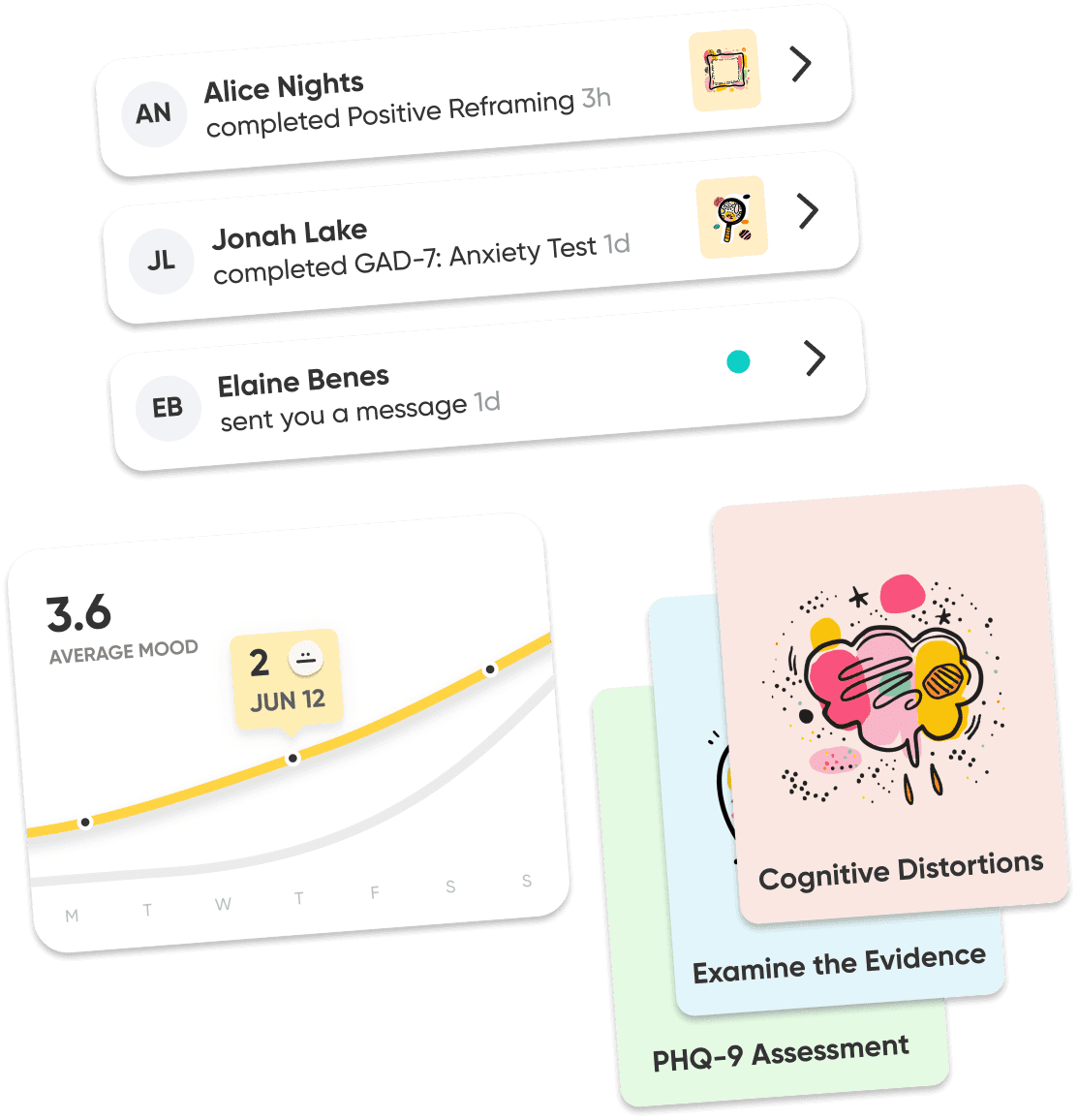
Enables insight into client use and mood: Digital platforms provide therapists with immediate access to client responses and mood tracking before sessions begin. This eliminates the guesswork that often characterizes traditional therapy approaches and allows for more targeted, data-driven interventions.
Improves engagement with interactive, mobile-first design: Modern clients expect digital experiences that feel intuitive and accessible. Interactive exercises that clients can complete on their smartphones or tablets naturally integrate into their daily routines, making therapeutic work feel less burdensome and more engaging.
Reduces paperwork and manual tracking: Digital tools eliminate the need for printing, scanning, and manually organizing client worksheets. Therapists can assign exercises with just a few clicks and see responses organized by client and date.
Encourages consistent therapy between sessions: Studies show that homework adherence has a positive association with therapy outcomes (Mausbach et al., 2010). Digital tools can make it easier for clients to keep up with therapeutic work between appointments.
Provides measurable data: digital platforms record each completed entry and mood check-in, giving concrete information to support session planning.
The most effective digital therapy tools mirror evidence-based therapeutic techniques while leveraging technology to enhance accessibility and engagement. In a UK survey of CBT therapists, activity schedules, behavioral activation diaries, case formulation worksheets, thought records, and resources to support the identification of conditional beliefs were the materials therapists regarded as most effective for depression (Tallon et al., 2019).
Digital Thought Record Worksheets represent one of the most widely used digital CBT tools. These interactive exercises guide clients through identifying automatic thoughts, examining evidence, and developing balanced perspectives. Unlike static paper versions, digital thought records guide clients with a prompt at each step and keep every entry in one place.
Emotion Regulation Journals help clients track mood patterns, identify triggers, and practice coping strategies as situations come up.
Exposure Hierarchies are easier to work with in digital formats, allowing clients to record anxiety ratings and notes as they work through challenging situations.
Values-Based Exercises help clients identify and connect with core values through interactive questionnaires, reflection prompts, and goal-setting activities that can be revisited and refined over time.
Guided Breathing and Mindfulness Activities use short guided videos to lead clients through breathing and meditation practices they can return to at any time.
When selecting digital therapy tools for your practice, several critical factors ensure both therapeutic effectiveness and practical usability:
Evidence-based and rooted in therapy models you use: Prioritize tools grounded in established therapeutic frameworks. A review of meta-analyses concluded that the evidence base for CBT is very strong, with the strongest support for anxiety disorders (Hofmann et al., 2012). Look for platforms that clearly align with CBT, DBT, or ACT principles and have been developed with input from practicing clinicians.
Intuitive for clients (especially on mobile): A review of mobile apps for CBT homework reported evidence that homework delivered through apps, including relaxation practice, cognitive therapy, and exposure exercises, can be effective (Tang & Kreindler, 2017). Choose tools that prioritize user experience and work seamlessly across devices.
Encrypted and compliant with data protection standards: Given the sensitive nature of therapeutic content, robust security measures are non-negotiable. Ensure any platform offers HIPAA compliance, GDPR readiness, and encryption for all client communications and data storage.
Flexible enough to tailor to each client's goals: In a study of 41 clients in private-practice CBT, clients were more likely to complete homework when the assignment matched what they said they wanted to remember from the session (Jensen et al., 2020). The most effective digital tools allow therapists to customize content and personalize exercises to match individual client needs.
Platforms like Offload exemplify these principles by offering over 170 evidence-based digital therapy tools, including interactive exercises, guided journals, assessments, and educational videos. Built by therapists for therapists, such platforms prioritize both clinical effectiveness and practical usability.
Successfully integrating digital therapy tools requires thoughtful planning and gradual implementation. Start by selecting one or two core tools that align closely with your most common therapeutic interventions. For CBT-focused practices, digital thought records and mood tracking tools often provide the highest impact.
Introduce digital tools gradually, beginning with highly motivated clients who are comfortable with technology.
Establish clear expectations about how digital tools complement rather than replace in-session work. Help clients understand that these tools are extensions of their therapy, designed to maintain momentum and deepen insights between appointments.
Regular review of digital tool data should become part of your session routine. Begin sessions by briefly reviewing client responses and which assigned tools they have completed, using this information to guide session focus and celebrate client progress.
Digital tools aren't just convenient - they're powerful clinical assets. They enable therapists to deliver more personalized care, reduce admin time, and improve consistency in how therapy unfolds between sessions. When therapists have access to client data between sessions, sessions become more focused and productive.
Instead of spending the first 10-15 minutes of each session catching up on homework completion, therapists can dive directly into meaningful therapeutic work, knowing they already have detailed insights into the client's recent experiences and progress.
Digital tools also enable more precise treatment planning. By tracking which exercises clients complete most readily and which generate the most insightful responses, therapists can refine their approach to match each client's learning style and preferences.
The administrative benefits compound over time. Digital platforms remove the need for printing, scanning, organizing, and storing physical worksheets, and client responses are kept together in one place.
Perhaps most importantly, digital therapy tools can extend the therapeutic relationship beyond weekly sessions. In Offload, clients get an app notification when their therapist sends a message or comments on one of their entries.
The integration of digital tools represents an evolution in how therapeutic care is delivered and experienced. Platforms like Offload demonstrate how thoughtful technology design can enhance rather than complicate therapeutic work. By offering over 170 interactive exercises, client insights between sessions, and seamless care plan customization, such tools enable therapists to focus on what they do best: building therapeutic relationships and facilitating meaningful change.
For therapists ready to explore how digital tools can support their practice, platforms like Offload offer comprehensive solutions designed specifically for mental health professionals. With evidence-based exercises, client insights between sessions, and seamless integration into existing workflows, these tools represent the future of therapeutic practice - one where technology enhances human connection rather than replacing it.
For a side-by-side look at three options, see Therapist Aid vs Psychology Tools vs Offload.
Want to see how digital tools could fit into your practice? Discover how Offload's interactive exercises, client insights between sessions, and evidence-based approach can help you save time. Visit Offload to explore over 170 digital therapy tools designed by therapists, for therapists, and see how easy it is to create personalized care plans that keep your clients engaged between sessions.
Common examples include digital thought records, emotion regulation journals, exposure hierarchies, values-based exercises, and guided breathing and mindfulness activities. A digital thought record, for instance, guides a client through identifying automatic thoughts, examining the evidence and developing a balanced perspective, with prompts along the way.
Look for tools that are evidence-based and rooted in the models you use, such as CBT, DBT or ACT, and that are intuitive for clients, especially on mobile. They should be encrypted and compliant with data protection standards, including HIPAA and GDPR, and flexible enough to tailor to each client's goals.
Start small. Pick one or two core tools that match your most common interventions, such as digital thought records and mood tracking for a CBT-focused practice, and introduce them first with motivated clients who are comfortable with technology. Explain that the tools complement rather than replace in-session work, and make reviewing client responses a regular part of each session.
They may. Research suggests mobile apps and online journals can make homework easier to complete and track, and that reminders and instant feedback may improve engagement. That matters because completing homework is linked with better therapy outcomes.

How Offload Supports Therapist-Client Work: A Guide for Mental Health Professionals
Offload gives therapists over 170 evidence-based tools to assign to clients. Assign in seconds, see responses before every session, and spend less time on admin.

How Therapists Can Know What's Really Going On With Clients Before Every Session
Research shows therapists often overestimate client progress and miss signs that a client is getting worse. Structured pre-session insight helps you see where each client is before the session starts.