
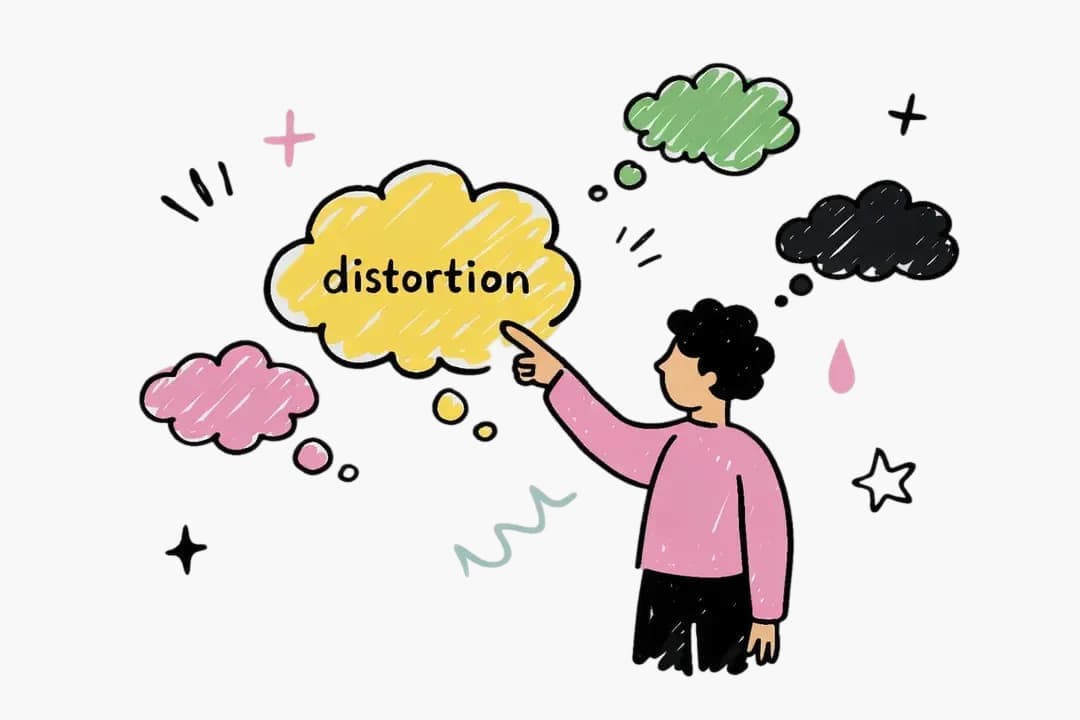
You're lying awake at 2am replaying something you said at dinner. You sent a message and haven't heard back, so clearly you've done something wrong. You made one mistake at work and now you're convinced you're terrible at your job.
None of these conclusions are based on evidence. But in the moment, every single one feels completely, undeniably true.
That's what cognitive distortions do. They're patterns of thinking - automatic, habitual, often invisible - that skew the way you interpret events and consistently push you toward the most negative available conclusion. They're not a sign of weakness. They're something all human brains do, and they tend to ramp up precisely when you're already anxious, low, or stressed.
The good news is that once you can name them, you can start to catch them. And catching them is the first step to changing them.
Cognitive distortions are habitual, inaccurate thought patterns that lead people to interpret situations more negatively than they really are. They were first identified by psychiatrist Aaron Beck in the 1960s, as part of his work developing CBT, and are now recognised as common contributors to emotional distress.
Beck noticed something striking while working with depressed patients: their suffering wasn't just about what was happening in their lives - it was heavily shaped by how they were interpreting what was happening. When he helped patients evaluate and change their distorted thinking, they felt better. When he helped them shift the underlying beliefs driving those thoughts, the improvement lasted.
These distortions often develop as coping responses to difficult experiences. Over time they become rigid and automatic - patterns the brain keeps running long after they've stopped being useful. People believe these thoughts without questioning them, which is what makes them so hard to shake.
Research published in Cognitive Therapy and Research found that as depression symptoms increased, distorted thinking increased too - and the same pattern holds for anxiety. The relationship runs in both directions: distorted thinking fuels low mood, and low mood fuels more distorted thinking. Breaking that cycle is one of the central goals of CBT.
See our blog post on: What Is CBT? A Plain-English Guide to Cognitive Behavioural Therapy
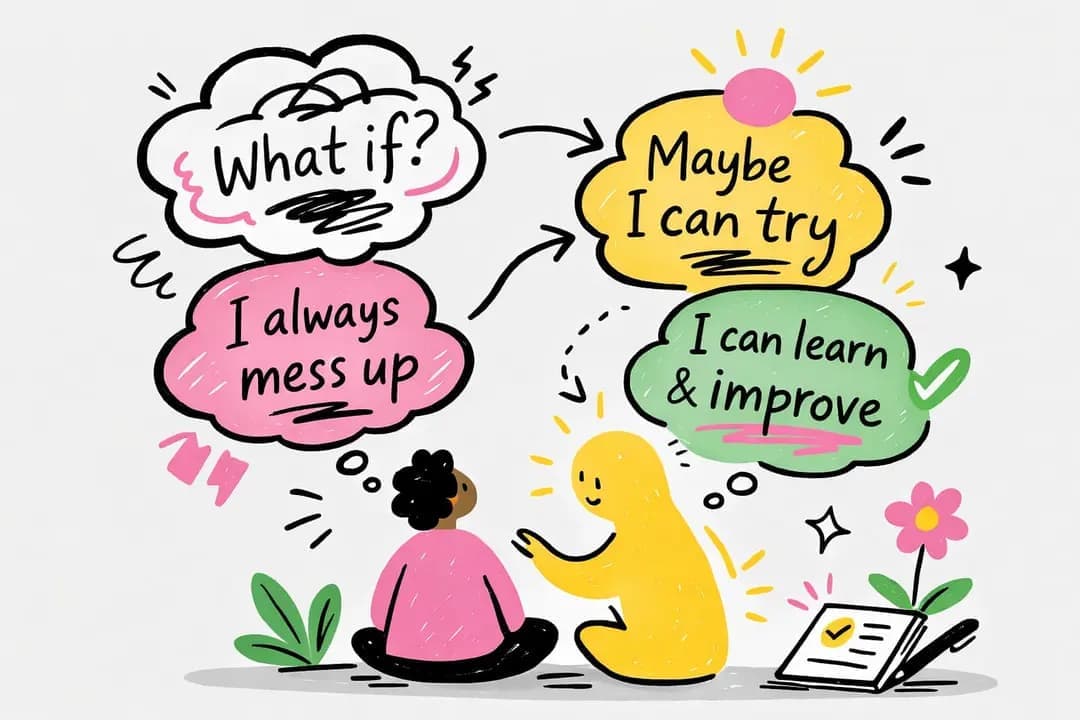
These are the thinking traps most people encounter most often. You'll probably recognise several of them immediately - and that recognition is exactly the point.
🖤 All-or-nothing thinking You see things in extremes with no middle ground. If something isn't perfect, it's a complete failure. "I got one piece of critical feedback - I'm obviously terrible at my job." The reality almost always lives in the grey area this distortion refuses to acknowledge.
🔭 Catastrophising Your mind jumps to the worst possible outcome and treats it as the most likely one. "I made an error in that email - my manager is going to think I'm incompetent." The catastrophe feels imminent and certain, even when the evidence is thin.
🧠 Mind reading You assume you know what other people are thinking - and it's almost always something negative about you. "She didn't smile when she said hello. She must be annoyed with me." There's rarely any actual evidence for these conclusions.
🔮 Fortune telling You predict the future with unwarranted certainty. "I know I'm going to embarrass myself at the presentation." The prediction feels like fact, which makes it harder to try - and sometimes creates the very outcome you feared.
🙈 Mental filtering You focus entirely on one negative detail while filtering out everything else. Ten positive responses and one criticism, and all your attention goes to the criticism. "Someone in the audience looked bored - the whole talk must have been awful."
🌑 Disqualifying the positive A step further than filtering - you actively dismiss positive experiences rather than just overlooking them. Compliments don't count because the person is "just being nice." Successes don't matter because you "got lucky." Any contradictory evidence gets discarded before it can land.
😤 Should statements You hold yourself - and sometimes others - to rigid rules about how things ought to be. "I should be further along by now." "I shouldn't need help with this." These rules tend to generate guilt and shame rather than motivation.
🪞 Self blaming You take responsibility for things that aren't entirely in your control. A friend seems quiet and you assume you caused it. A project goes wrong and you hold yourself solely responsible, even when multiple factors were involved.
🏷️ Labelling Instead of describing a specific behaviour, you apply a fixed global label. "I'm a failure." "I'm an idiot." Labels feel definitive and leave no room for nuance, growth, or context.
💭 Emotional reasoning You treat how you feel as evidence of how things actually are. "I feel stupid, therefore I am stupid." "I feel like a burden, so I must be one." Emotions are real - but they're not always reliable narrators of reality.
One of the hardest things about cognitive distortions is that they don't feel like distortions in the moment. They feel like clear-eyed observations. Like you're finally seeing something accurately.
This happens because the thoughts arrive automatically - before conscious processing has a chance to catch up. A brain that quickly spots potential threats and fills in missing social information is a brain that keeps its owner safe. The problem is that the same system doesn't distinguish well between a genuine threat and an ambiguous text message. It fires the same alarm either way.
A study published in PMC found that cognitive distortions were significantly higher in individuals with panic disorder, generalised anxiety disorder, and social anxiety disorder - with different disorders tending toward different distortion types. Catastrophising and mind reading were common across all three. Understanding which distortions show up most in your own thinking is the first step to doing something about them.
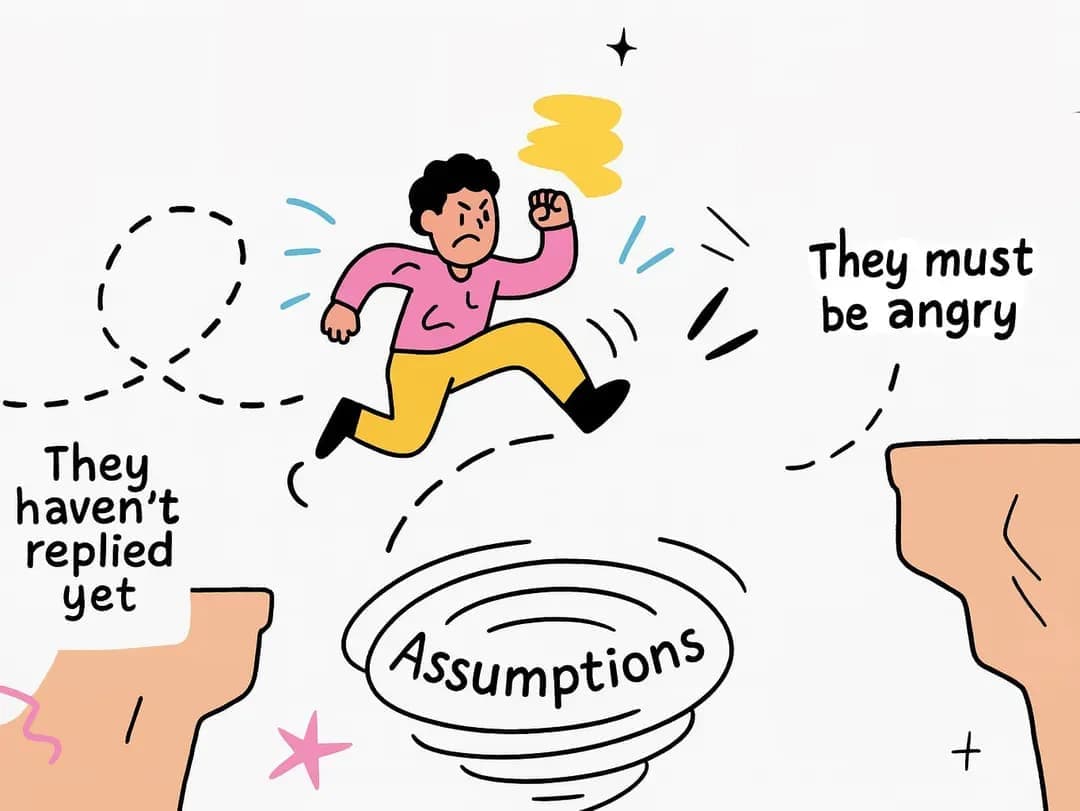
Cognitive distortions are habits - and like all habits, they can be changed.
CBT works by helping you slow down the automatic thought process long enough to examine it. Not to replace every negative thought with a positive one, but to ask: is this actually accurate? And whether there's a more balanced interpretation available.
The most practical tool for doing this is a thought record - a structured exercise that takes you from the triggering situation, through the automatic thought, through the evidence for and against it, and finally to a more balanced view. The process of writing thoughts down and examining them activates a different part of your thinking than the automatic distortion does. That shift is where the change happens.
With practice, catching distortions becomes more automatic. You start to notice the familiar pull of catastrophising or mind reading before it has fully taken hold - and you get better at choosing a different response. That's not toxic positivity. That's a learnable skill with a strong evidence base behind it.
Working with a therapist gives you the most supported path through cognitive distortions. But you don't need a referral to start getting familiar with your own patterns.
Simply knowing the names above is useful. Language gives you something to hold onto. When the mind-reading spiral starts at midnight, being able to say "this is mind reading - I have no actual evidence for this" creates a small but real moment of distance between you and the thought.
Offload's cognitive distortion tools are built to support exactly this kind of independent practice - helping you identify which distortions show up most in your thinking, and giving you structured exercises to work with them in your own time.
Cognitive distortions are not a character flaw or a sign of weakness. While occasional distorted thinking is normal, repeated patterns can reinforce mental health challenges and quietly make daily life harder than it needs to be.
They're part of being human. And the brains that run them most persistently are often the most sensitive, perceptive, and conscientious ones.
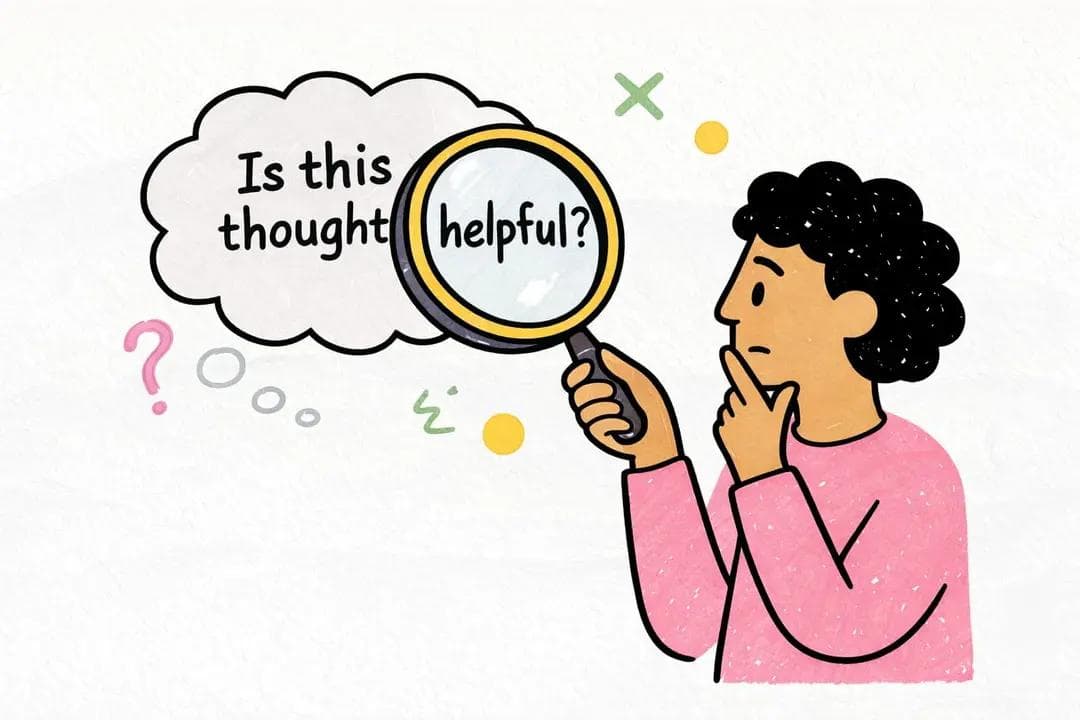
What changes things isn't eliminating negative thoughts. It's learning to notice them clearly enough to ask: is this actually true? That question - small, quiet, persistent - is where the shift begins.
If you want to go deeper on how CBT approaches that question in practice, our guide to thought records walks through the process step by step.
Related Articles

What is a Thought Record in CBT? (And how it can change the way you think)
Feeling stuck in negative thoughts? A thought record helps you pause, question, and reframe them.

What Is CBT? A Plain-English Guide to Cognitive Behavioural Therapy
You've probably heard the term CBT thrown around - by your GP, a friend who's been in therapy, or maybe on a mental health app. But what does it actually mean?

How to Analyse a Negative Thought with CBT
Analyse a Thought is a digital CBT tool that helps clients break down negative thinking. Guide them through identifying unhelpful thoughts, spotting distortions, and creating more balanced alternative