
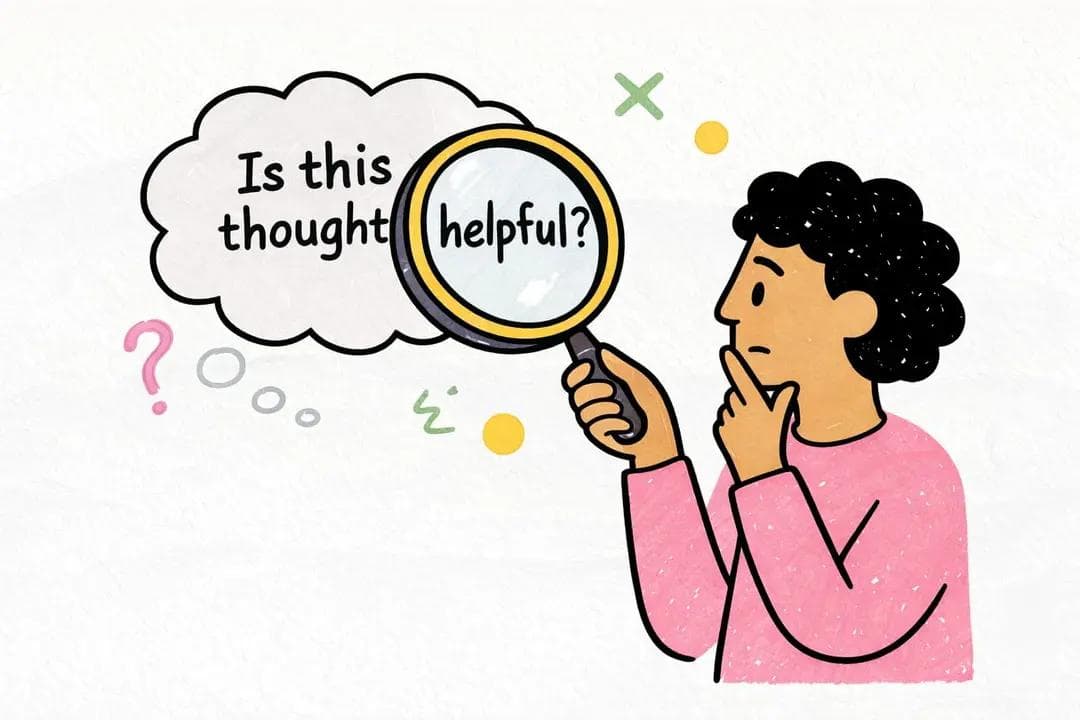
Most therapists have a version of the same between-session problem. You assign a thought record. The client means to complete it. Life gets in the way, or the worksheet gets lost, or it just felt too much like homework. They arrive at the next session without it, you piece together the week from memory, and the first fifteen minutes go on catch-up rather than clinical work.
It's not a failure of effort on anyone's part. It's a design problem - and one that affects the quality of therapy in ways that are easy to normalise because they're so consistent.
Offload is built around solving it. This guide covers how it works in practice, what the tool library contains, and what therapists working with it say about the difference it makes.
Before getting into what Offload offers, it's worth being clear about why between-session work fails so reliably. Research on CBT homework compliance points consistently to the same two culprits: tasks that feel burdensome, and tasks that feel disconnected from what's happening in sessions (emosapien.com).
A printed worksheet that takes twenty minutes and lives at the bottom of a bag is not going to get done. A brief, clearly worded exercise on a phone, with a visible connection to the work you've been doing together, almost certainly will.
This shapes everything about how Offload's tools are designed. They're short, interactive, and deliberately approachable in tone - not because brevity is a gimmick, but because a tool a client doesn't complete generates no clinical value at all.
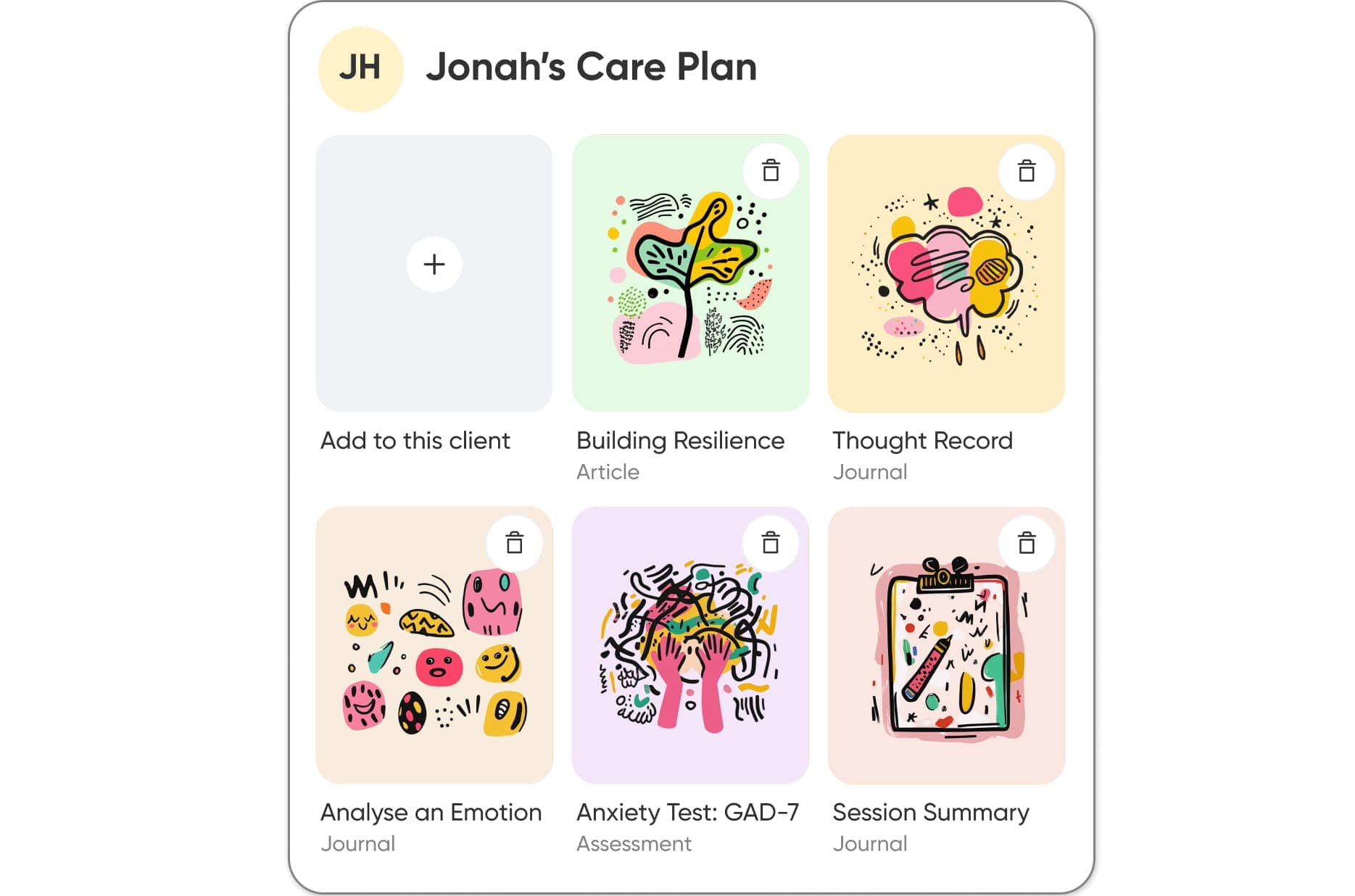
The free companion app means everything is in one place and always accessible. Tools are assigned by the therapist with context, so clients understand the purpose of what they're being asked to do - which is consistently the strongest predictor of whether they'll actually do it.
Karen Lobo, NHS Mental Health Practitioner, describes what this looks like from a clinical perspective:
"My favourite part is the Tools page - it's friendly and the exercises are very good. The wording helps to orientate the client to the sessions and what to expect."
When clients understand why an exercise matters - and completing it doesn't feel like additional burden on top of an already difficult week - engagement improves meaningfully. And that improvement compounds: research reviewing nearly 300 studies and over 30,000 patients found the therapeutic alliance to be among the strongest predictors of positive outcomes across modalities, with between-session engagement playing a significant role in sustaining it (positivepsychology.com).
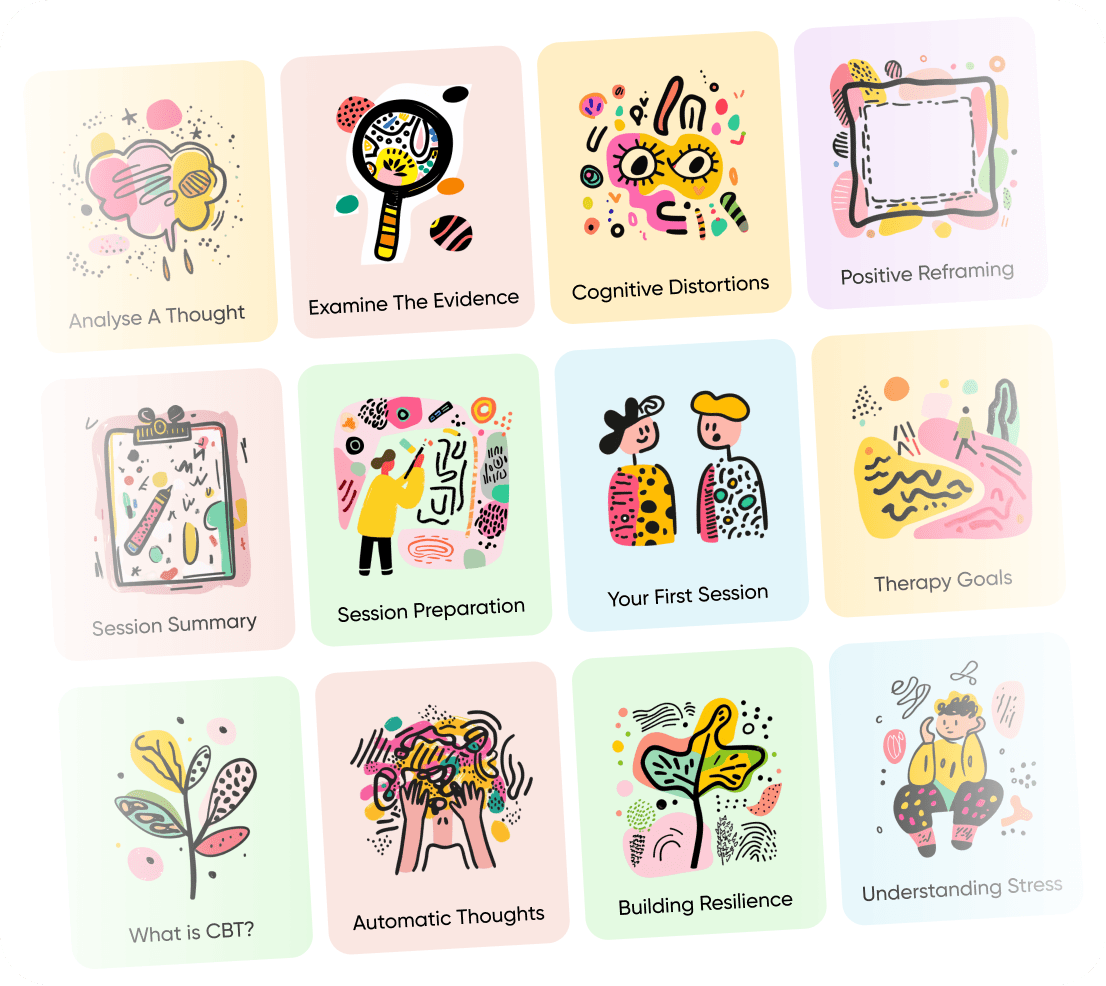
Offload's library covers the range of evidence-based approaches used in private practice - not just CBT. Whether you work primarily in one modality or draw across several, the library is broad enough to assign tools that fit both your clinical approach and your individual clients.
🧠 CBT - thought records, cognitive restructuring, behavioural experiments, and psychoeducation on automatic thoughts, cognitive distortions, and the CBT model. The tools are interactive and guided, built to work independently without requiring you to talk the client through each step beforehand - see all CBT tools.
What Is a Thought Record in CBT? - share with clients new to the technique.
🌿 ACT - values clarification, defusion exercises, committed action planning, and psychological flexibility practices - see all ACT tools.
💙 DBT - distress tolerance skills, emotion regulation, mindfulness, and interpersonal effectiveness exercises - see all DBT tools.
👁️ EMDR - psychoeducation and preparatory resources to support clients between trauma processing sessions - see all EMDR tools.
📋 Assessments - clinically informed self-assessments to establish a baseline and track change over time - see all assessments.
🎥 Videos and Mini Courses - short psychoeducation content clients can watch and return to independently between sessions - see all videos and mini courses.
📓 Journals - guided reflective prompts across mood, relationships, self-esteem, grief, goals, and more - see all journals.
The breadth matters practically. Being able to assign a values exercise to one client, a distress tolerance tool to another, and a thought record to a third - without leaving the dashboard - is what makes Offload workable across a full caseload rather than useful for a narrow slice of it.
One feature therapists consistently highlight is the psychoeducation content. Dr Megan McEwan, NHS Counselling Psychologist (BABCP), explains why:
"I love it and especially like the psychoeducation - I often find clients forget, so it's useful they can access it at any time."
Psychoeducation delivered in session competes with everything else happening in the room. When clients can return to a clear explanation of the CBT triangle, or what a cognitive distortion is, or why behavioural activation works - in their own time - concepts tend to land differently. They come to the next session having processed the material rather than half-remembered it, and the conversation can move forward rather than revisiting ground you've already covered.
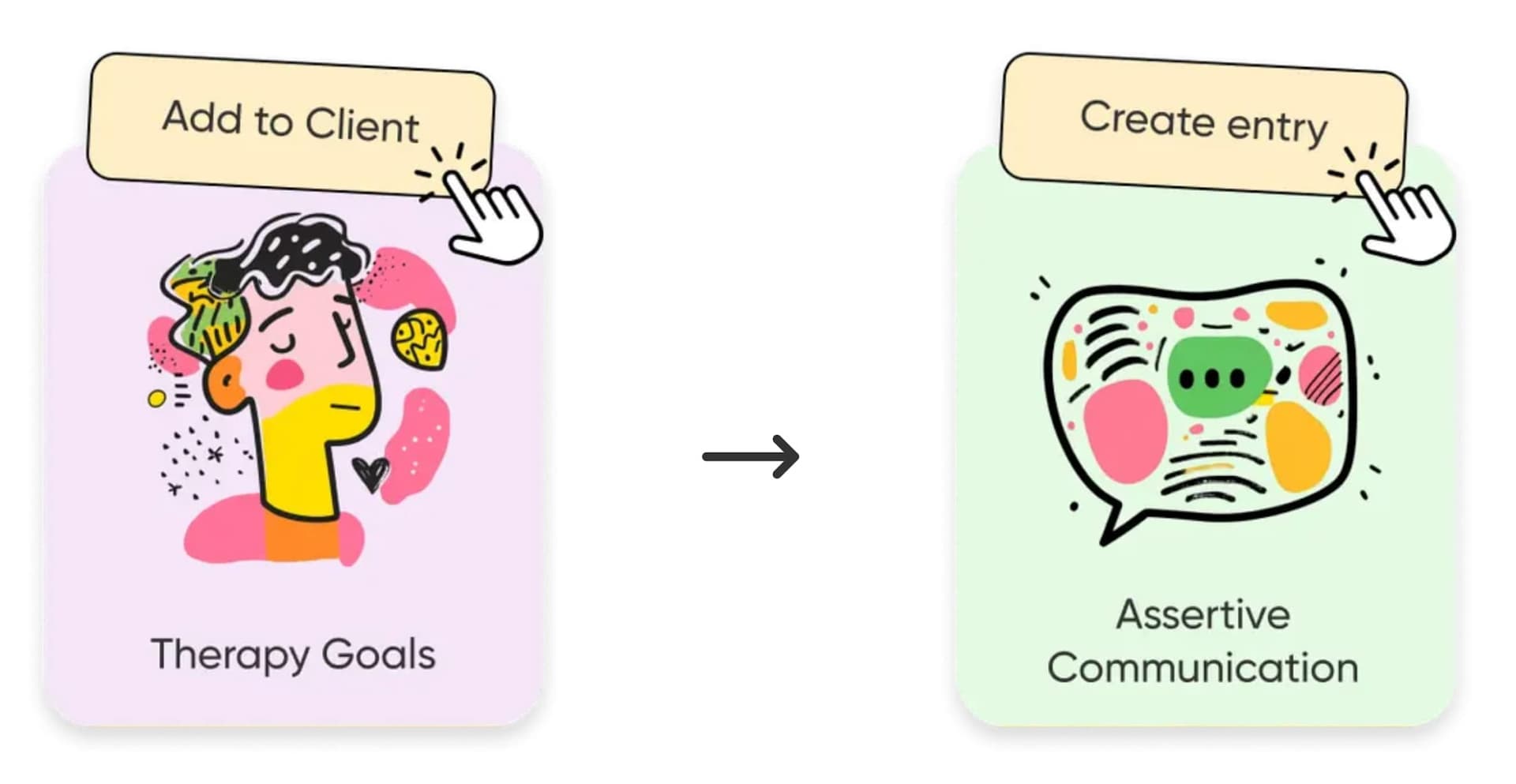
You can share tools with clients directly from the tools page or from the therapist dashboard - select the tool, select the client, done. There's no printing, no formatting, no email attachment, no follow-up to check whether the client received it.
For therapists managing a full caseload, the cumulative time saving across a week is real. Admin that currently sits between sessions - writing out homework instructions, preparing worksheets, chasing completion - largely disappears.
Dr Harriet Mellotte, Clinical Psychologist and CBT Therapist (BABCP), captures what this means for practice:
"The world of CBT has been lacking an app which enables the sharing of CBT worksheets and homework tasks between clients and therapists, but Offload completely does this, making the service we offer more professional and the benefits to clients greater."
When between-session work arrives through a structured, polished platform rather than a printed sheet, it communicates something to clients about how their therapy is being held between appointments.
That perception isn't incidental - it shapes how seriously clients take the between-session work, and how connected they feel to the process week to week.
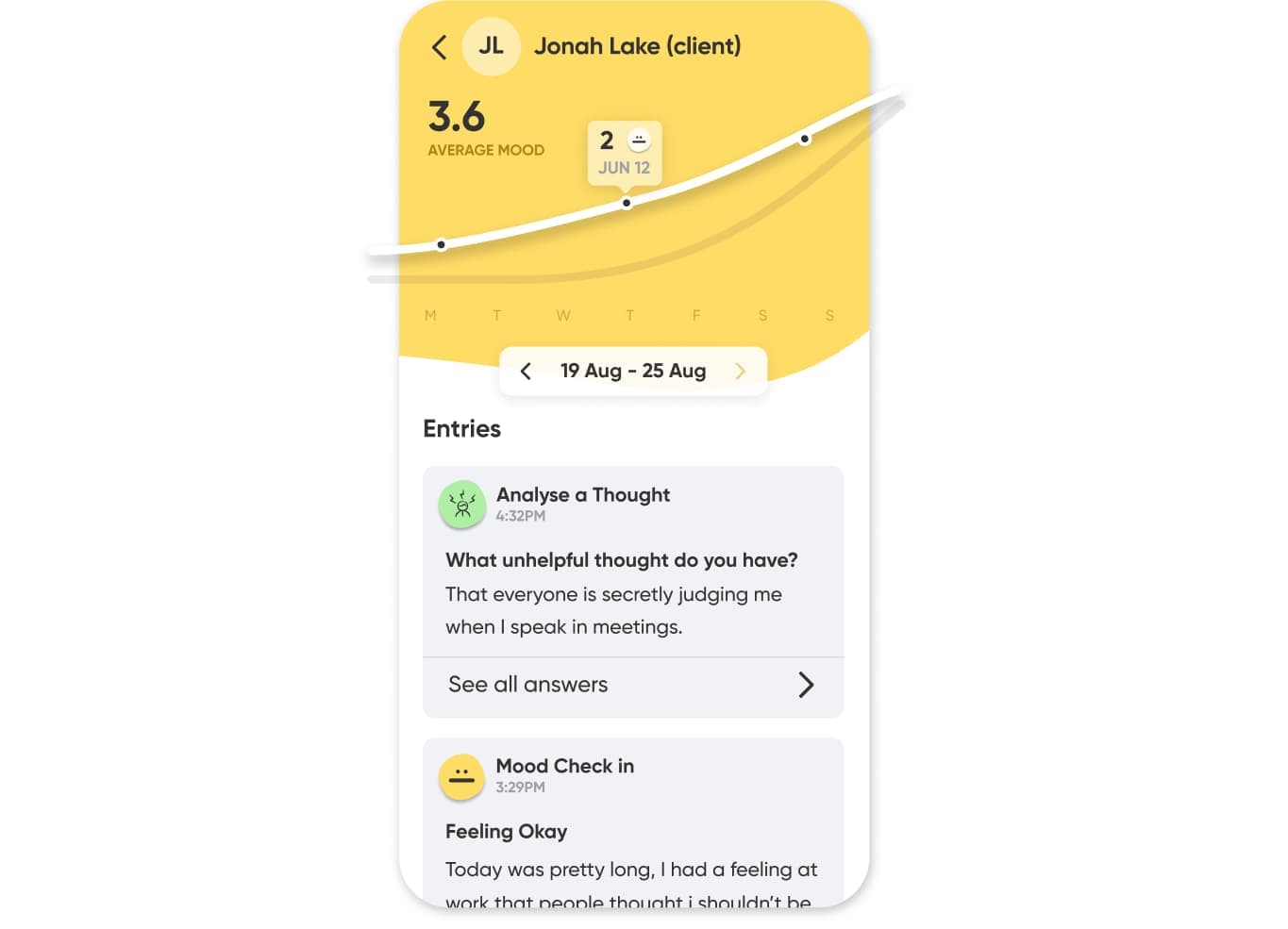
When clients complete their assigned tools, responses appear directly in your dashboard before the session begins - a feed of mood tracking, thought records, completed exercises, and anything they skipped, which is itself clinically useful. You already know where your client is before they walk in. The session starts mid-conversation rather than from a standing start, and the time that would otherwise go on catch-up goes on the clinical work instead.
Research published by the Society for the Advancement of Psychotherapy is clear on why this matters: therapists who use structured client feedback between sessions produce better outcomes and are significantly better placed to identify when clients are quietly deteriorating rather than progressing (societyforpsychotherapy.org).
The structure of Offload's tools is what makes that feedback actionable - responses follow a consistent format that can be reviewed quickly and connected directly to what you're planning to focus on.
Blog: How Therapists Can Know What's Really Going On Before Every Session.
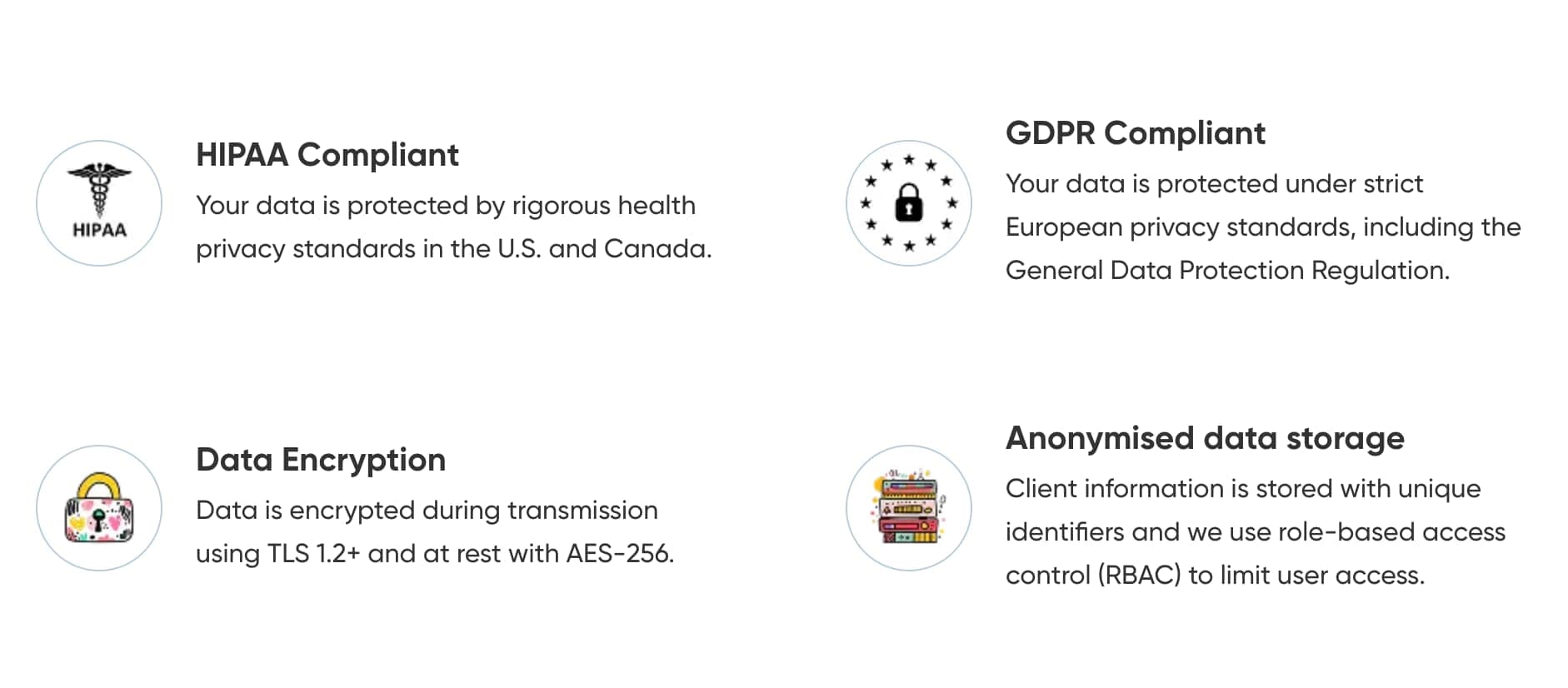
Offload is fully HIPAA and GDPR compliant. Data is encrypted in transit using TLS 1.2+ and at rest with AES-256. Client information is stored with unique identifiers, and role-based access control limits access to authorised users only.
For therapists in private practice - where data responsibility sits directly with you - those standards matter, and they're worth communicating to clients who may be cautious about using an app for mental health reflection.
Offload is particularly well suited to private practice therapists and clinics working with CBT, ACT, DBT, or integrative approaches. It fits most naturally into practices where between-session tasks are already part of the clinical model - and where the current method of managing them (PDFs, printed sheets, verbal instructions) isn't working as well as it could.
It works less well as an occasional resource and better as a consistent part of how sessions are structured - assigning tools routinely, reviewing responses as standard preparation, and treating the dashboard as part of the clinical picture rather than an optional add-on.
The therapists who get the most from it are the ones who integrate it into every client's programme from the start, rather than reaching for it selectively.
Blog coming soon: How to Get the Most Out of Every Therapy Session - this can be shared with clients starting out.
For teams and organisations, a separate Teams plan supports multiple accounts with flexible pricing - see Offload for Teams.
Offload offers a 30-day free trial with no credit card required, which is enough time to assign tools to a handful of clients, review their responses before a session, and form a clear sense of whether it fits your workflow.
Donna Maria Bottomley, CBT and EMDR Therapist (BABCP), reflects on her experience with the platform:
"Really like the way that the resources are just the right size. They're informative without being dry and dull. I'm happy to direct my clients here and think this website is offering a helpful service for therapists and clients. They genuinely want to offer helpful tools and resources."
The 30-day trial is the most direct way to answer the question of whether it changes how your sessions feel.
Offload connects therapists with clients between sessions through a library of 200+ evidence-based tools - designed to be completed, not abandoned - with responses fed back to the therapist dashboard before every session.
It reduces the admin involved in assigning and tracking between-session work, increases the likelihood that clients actually engage with it, and gives therapists a structured picture of where each client is before the session begins.
For practices where between-session work is already part of the clinical model, it makes that work more consistent, more visible, and more useful.
Related Articles

How therapists can know what's really going on with clients before every session
Research shows therapists overestimate client progress by 65%. Structured pre-session insight closes that gap.

Therapy Homework: How to Boost Engagement Between Sessions
Therapy homework helps clients apply insights to real life - building confidence and habits. With the right digital therapy tools, it's easier than ever to assign, track, and discuss progress together